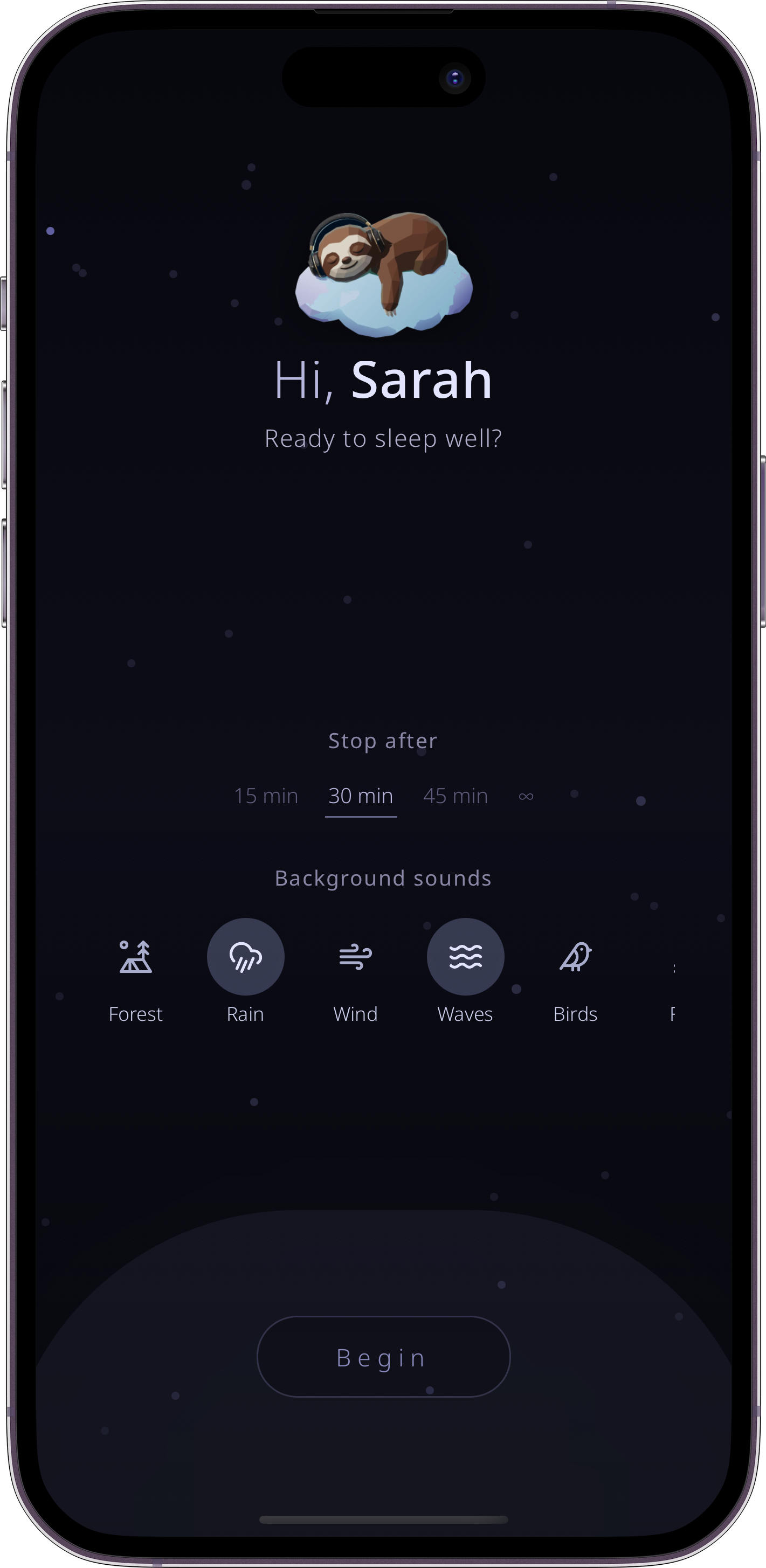
Background sounds
Rain. Forest. Waves. Fire. Wind. Birds. Layer them with the words, or use them alone.

One word. Then another. Your mind pictures it. The loop breaks. You fall asleep.
Download Free


That loop of thoughts at midnight — replaying conversations, running through tomorrow's list, worrying about nothing in particular — isn't a disorder. It's your brain doing exactly what it was built to do.
It's still working.
The problem isn't that your brain is broken. It's that nothing has told it to stop.
Shuffli reads you a word.
None of them are related. None of them lead anywhere. That's not a bug — it's the whole mechanism.
Your brain can't build a worry spiral out of disconnected images. It just... follows. And somewhere in the following, sleep arrives.
This technique is called Serial Diverse Imagining.
Developed by researchers at Simon Fraser University to give the brain something gentle to do — gentle enough to occupy it, meaningless enough to let it drift. The same broad idea is often called cognitive shuffling: unrelated bedtime images that never turn into a coherent worry story.
Read the full researchRead the complete guide“A racing mind, worries, and uncontrollable thoughts are common bedtime complaints. The Serial Diverse Imagining task diverts attention away from sleep-interfering thoughts.”
— Beaudoin, Digdon, O'Neill & Rachor · SLEEP 2016 (American Academy of Sleep Medicine)
Tested against standard sleep therapy.
In a clinical study, Serial Diverse Imagining was as effective as Structured Problem-Solving — the gold-standard cognitive treatment for pre-sleep arousal. The difference: standard therapy must be done 15 minutes before bed. Shuffli is done in bed, in the dark, while you're already trying to sleep.
Works on the right problem.
Pre-sleep cognitive arousal — the racing mind — is one of the most common reasons people can't fall asleep. Shuffli targets it directly by shifting attention away from goal-directed thought.
The improvement is significant.
Participants showed large effect sizes across sleep quality, sleep effort, and pre-sleep arousal — even as external stress conditions worsened.
Open Shuffli.
Choose your session length and a background sound if you want one. Or don't — the words work on their own.
Close your eyes.
A word appears. Picture it for a moment. It doesn't matter if the image is vivid or blurry — just let your mind go to it.
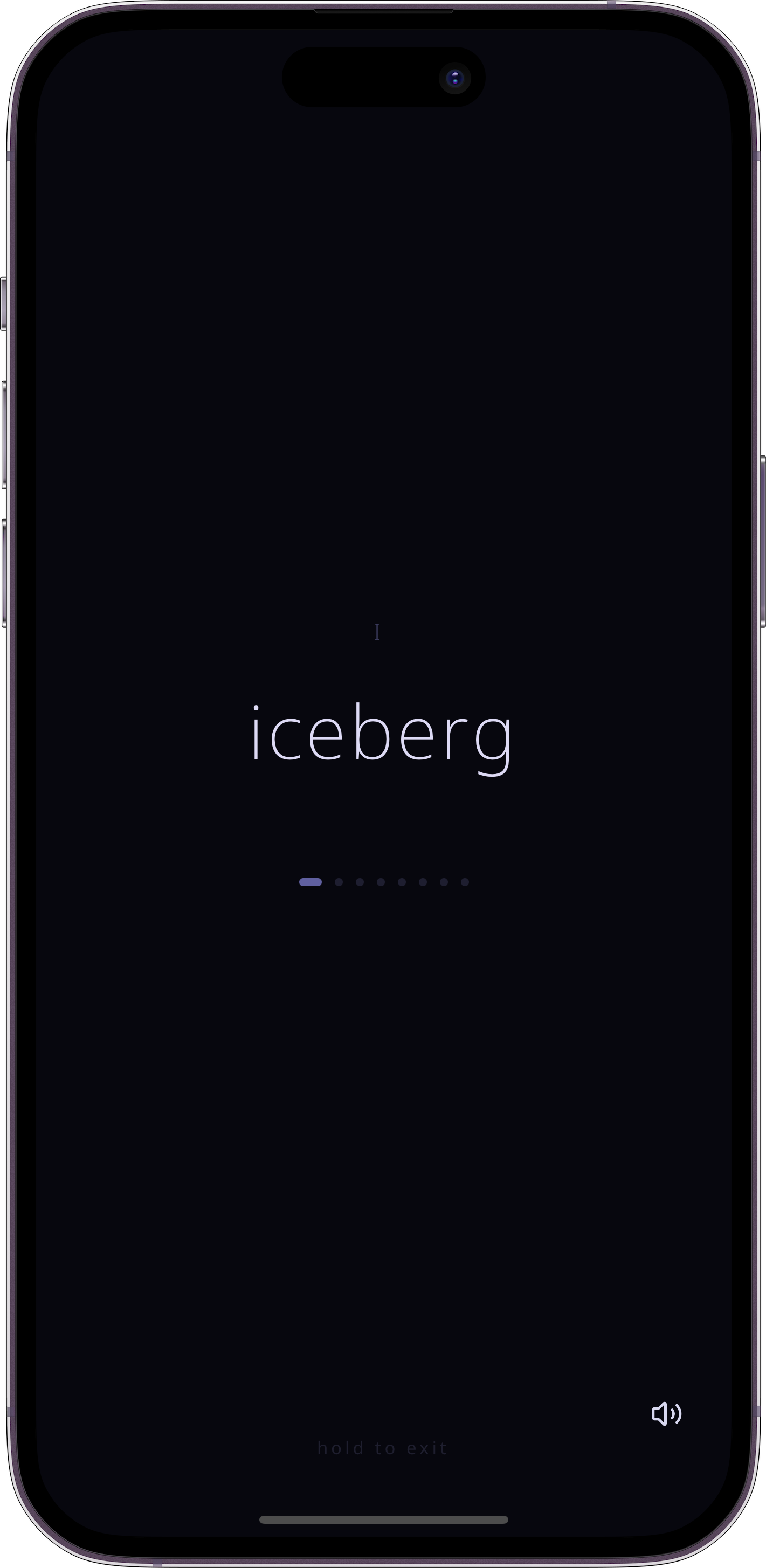
Let the next word arrive.
Another word. Another image. You're not trying to sleep. You're just following. Sleep will follow you.
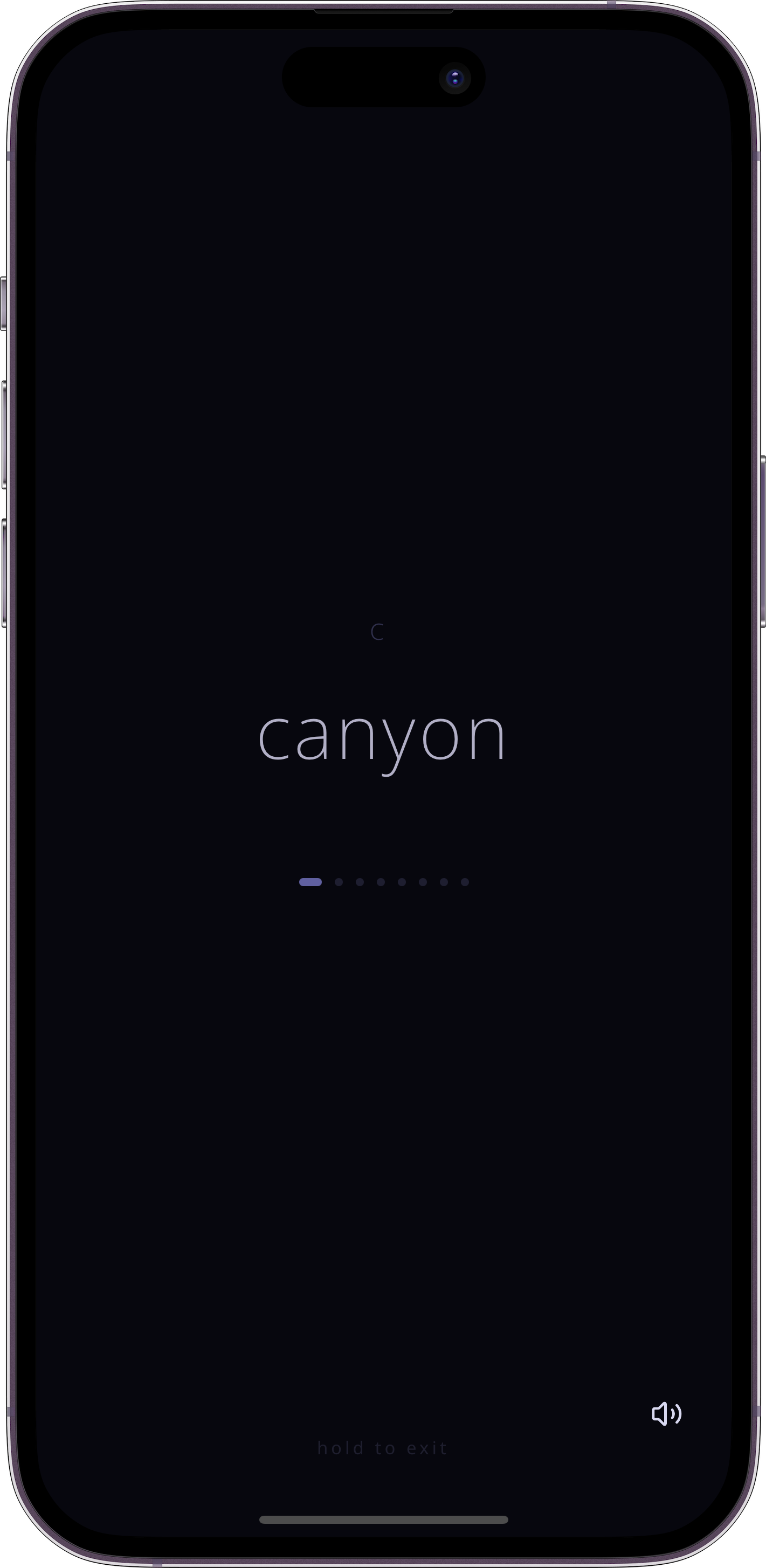
Then you drift off.
No forcing it. No perfect routine. Your mind has something gentle to do, and sleep can finally take over.
Download Free
Rain. Forest. Waves. Fire. Wind. Birds. Layer them with the words, or use them alone.
15 to 45 minutes, or no limit. Set it and forget it.
Tell us your name and we'll greet you each night. A small thing. It matters.
Shuffli is not a platform. It's a tool you use and put down.
Works offline. No login. No data collection.
Full support in both languages.
Excerpts from App Store reviews; wording may be edited for length—not every review was five stars.
App Store reviews
Didn't expect this to work so well. Once you commit to the instructions, you literally fall asleep in minutes.
App Store reviews
Honestly didn't expect it to work so well. You only have to remember to put your phone on the charger before you use it — otherwise you wake up with a dead phone.
App Store reviews
Really nice minimalistic app and it did the job for me. Amazing!
"I've tried meditation apps. They don't work for me."
Shuffli isn't meditation. You're not trying to clear your mind — you're filling it with something harmless. That's a meaningful difference for people who can't meditate their way to sleep.
"What if I can't picture things vividly?"
You don't need to. A vague impression is enough. The point isn't visualization quality — it's redirecting attention away from structured thought.
"What if I wake up in the night?"
Start a new session. The technique works whenever your brain is in that restless, semi-active state. It's not only for initial sleep onset.
"Is this just a white noise app?"
The ambient sounds are optional. The words are the core. White noise occupies your ears; Shuffli occupies the part of your brain that's keeping you awake.
"What is cognitive shuffling?"
In everyday language it's often this: picturing a stream of unrelated words or images in bed so anxious, goal-focused thinking can't keep linking one thought to the next. Researchers study the approach as Serial Diverse Imagining (SDIT). Shuffli applies that method—for how the SFU-led trial was run and what it did (and didn't) prove, head to The Science.
Free to download. No account required. No sleep journal to maintain, no breathing exercises to remember, no content library to browse. Just words, one at a time, until you're gone.
Download Free
Based on sleep science from Simon Fraser University and MacEwan University.